
Platform safety refers to the rules, policies, practices, and technologies that protect users from digital harm, whether it be fraud, abuse, exposure to explicit material, or anything that could negatively affect their experience and mental health.
When users open social media, chat on messaging apps, or browse company websites, they mainly expect two things: their personal data won’t be stolen and their experience will be fulfilling. But these platforms that were once designed to be a place to connect and be informed are now filled with cyberbullies, keyboard warriors, scammers, and hackers.
With platform safety, the risk of online threats can be greatly reduced. But without it, the very foundation of online spaces would quickly crumble. Let’s talk about it more in this blog.
Importance of Platform Safety for Online Platforms
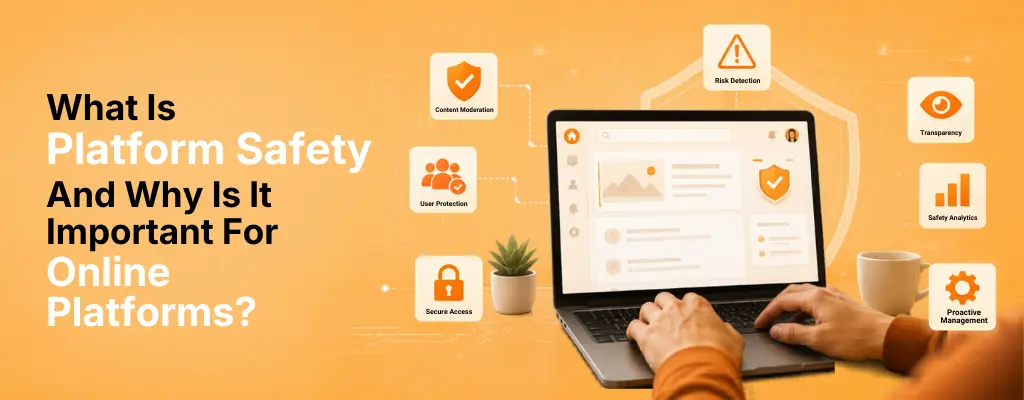
As much as it is a personal responsibility to look after yourself and be respectful online, platforms are also liable for maintaining harmony within digital environments. Platform safety is enforced to uphold policies and guidelines designed to protect user information, prevent phishing and scams, and reduce cases of abuse and harassment.
For companies, prioritizing platform safety results in increased trust, better brand reputation, and improved regulatory compliance.
Let’s take a clothing brand, for example. Running a campaign on social media would mean high traffic and engagement on the platform. To prepare, the brand should have a content moderation strategy to remove irrelevant and unwanted posts and comments. With this in place, their campaign can reach the right audience and bring a positive outcome.
However, if poor moderation is applied, the result of the campaign may not be in their favor. They may lose followers and even gain a bad online image. If users lose trust in the brand, revenue may fall.
Additionally, companies face ongoing pressure to comply with evolving regulations. Through platform safety, they can avoid legal penalties and liabilities that may arise from ignoring the welfare of consumers.
Key Components of Safe Online Platforms
There isn’t a single tool for keeping online platforms safe. As mentioned, platform safety is composed of different guidelines, measures, technologies, and techniques that work as a system to manage interactions in digital spaces. Below are the core components:
- Content moderation (AI + human review)
Content moderation is a key process in upholding platform safety. It acts as a filter for identifying and removing harmful content (spam, hate speech, pornography, propaganda, etc.) that violates guidelines and doesn’t align with the brand’s vision and goals.
Due to the high volume of user-generated content on platforms, AI-powered moderation paired with human review is being adopted by companies. Automation speeds up the process while humans provide fair, accurate, and nuanced evaluations.
- Community guidelines and enforcement
Online safety is all about what’s best for users, especially those from vulnerable groups. Community guidelines define the rules and acceptable behaviors when engaging on a platform. These outline the types of posts that can be removed, restricted, or censored, as well as the possible penalties for violation.
For example, Meta’s community standards cover safety, privacy, integrity, and objectionable content, which specifically prohibits bullying, violent threats, and misinformation across Facebook, Instagram, and Threads.
- User reporting systems
Users also play a huge role in enforcing platform safety. Through user reporting systems, like report buttons, they can flag problematic posts and profiles that disrupt their overall experience.
- Fraud and abuse detection
Machine learning and AI paved the way for effective detection of unauthorized and malicious activities. AI-driven systems can monitor behavioral patterns to spot stolen credit cards and even fake accounts used for scams and abuse.
- Data privacy protection
Digital platforms also implement guidelines on data privacy protection to let users know how their data is collected, stored, and used while on the platform. These are all in accordance with any local and national regulations, such as the GDPR and CCPA.
Platform safety is only achieved when these aspects work together. When community guidelines are defined clearly with grave consideration for children and marginalized people, the rest of the processes involved can be implemented effectively.
Common Risks of Poor User Protection
Maintaining platform safety is an arduous task, but one should know the serious risks that come with poor user protection:
- Harmful or illegal content exposure
Digital platforms have increasingly become channels for spreading harmful and illegal content, and this comes with a cost. Without investing in content moderation services, users are exposed to online violence, inappropriate imagery, hate speech, threats, and misinformation that could eventually lead to emotional and psychological harm. This could discourage people from interacting with your brand altogether.
- Fraud, scams, and abuse
Fraud, scams, and abuse are easier to accomplish through a screen. Bad actors are becoming more creative in forming narratives and strategies to convince people to share their personal and financial data. This becomes an even greater risk to your credibility when platform safety is put second.
- Brand reputation damage
A brand that neglects platform safety is one controversy away from backlash. A harmful comment or post that went viral could produce an avalanche effect that could permanently damage the company’s reputation.
- Legal and regulatory risk
Platforms that lack policies and guidelines on user protection can suffer from legal penalties. When this happens, trust declines, and business will most likely fail.
- User churn
As fast and easy as it is for users to find your brand online, the quicker they will switch if they learn that you don’t prioritize their safety. High churn rate hurts your profit and impedes business growth.
How Online Platforms Protect Users and Businesses
Protecting users at scale requires more than just setting rules. Platforms rely on structured moderation workflows, layered enforcement systems, and a combination of automation and human oversight to manage millions of interactions daily.
At the core of it is content moderation. Every post, comment, image, or message is scanned through automated filters that flag potential violations based on keywords, behavioral signals, and historical data. It can quickly detect spam, hate speech patterns, or suspicious activity in real time.
However, AI alone is not enough. Context matters. This is where human review comes in. Moderators assess edge cases, interpret tone, and make judgment calls that machines cannot reliably handle.
Enforcement systems follow a structured approach. Once content is flagged, platforms apply actions such as warnings, content removal, temporary restrictions, or permanent bans. These actions are often guided by internal severity levels to maintain consistency.
Finally, platforms implement escalation workflows. Not all cases are equal. Sensitive issues such as threats, exploitation, or coordinated abuse are escalated to specialized teams or even legal authorities. This structured escalation ensures that high-risk situations are handled with urgency and precision.
Best Practices for Safer Digital Communities in 2026
As online threats evolve, platform safety strategies must continuously adapt. The following best practices reflect what effective platforms are doing today and where the industry is heading:
- Adopt hybrid moderation. Combine automation for speed with human judgment for accuracy and fairness.
- Focus on real-time monitoring. Implement live detection systems for chats, comments, and user behavior to reduce immediate exposure to harmful content.
- Set clear and enforced policies. Define community guidelines in simple terms and apply them consistently across all users.
- Improve user reporting systems. Make it easy for users to flag issues and ensure reports are reviewed promptly.
- Perform continuous updates. Regularly refine policies, detection models, and enforcement strategies based on emerging threats.
Modern platforms are also investing in machine learning models that adapt to new risks, such as evolving scam tactics or coded language used to bypass filters. These systems learn from patterns over time, improving detection accuracy without constant manual intervention.
They are also increasingly publishing transparency reports, explaining moderation decisions, and giving users visibility into enforcement actions. This openness strengthens credibility and helps users understand how safety is maintained.
Platform Safety vs Cybersecurity: Key Differences
Platform safety and cybersecurity are often used interchangeably, but they address different types of risks within digital environments. Understanding the distinction helps organizations build a more comprehensive protection strategy.
- Platform safety → User behavior and Content risks
Platform safety focuses on harmful interactions such as harassment, misinformation, and inappropriate content. It’s centered on making users feel safe, respected, and protected while interacting on the platform.
- Cybersecurity → Systems, Networks, and Data
Cybersecurity prioritizes protecting infrastructure from breaches, hacking, and unauthorized access. Its goal is to make sure that systems remain secure, stable, and resistant to attacks.
While they serve different roles, both functions work together. For example, an account takeover is primarily a cybersecurity issue. But once compromised, that account can be used to spread scams or abuse, which becomes a platform safety problem.
In simple terms, cybersecurity protects the system behind the platform, while platform safety protects the people using it. Both are essential, and neglecting one weakens the overall integrity of the platform.
Wrapping Up
Platform safety isn’t just a technical requirement anymore. It plays a big role in how people experience and trust an online platform. However, managing this at scale isn’t easy. It takes a mix of smart technology, human judgment, and clear rules that are applied consistently. Platforms also need to stay flexible, because online risks don’t stay the same for long.
At the end of the day, platform safety comes down to how well a platform takes care of its users. When people know they’re protected, trust grows naturally. And that trust is what keeps platforms relevant, credible, and worth coming back to.
Frequently Asked Questions
How Does Platform Safety Protect Users Online?
Platform safety protects users online by identifying, filtering, and removing harmful content and behavior through moderation systems, user reporting, and enforcement actions. It reduces exposure to abuse, scams, and inappropriate material while ensuring that interactions remain respectful and secure.
What Are The Key Components Of Platform Safety?
The key components of platform safety include content moderation, community guidelines, enforcement systems, user reporting tools, fraud detection, and data privacy protection. These elements work together to manage user behavior, prevent harm, and maintain a safe digital environment.
What Risks Can Poor Platform Safety Create?
Poor platform safety creates risks such as exposure to harmful content, increased fraud and scams, reputational damage, legal issues, and user churn. Without proper safeguards, platforms can quickly lose trust and struggle to retain users.
How Does Platform Safety Build User Trust?
Platform safety builds user trust by creating a consistent and secure experience where harmful content is minimized and rules are enforced fairly. When users see that a platform actively protects them, they are more likely to engage, share information, and remain loyal.
What Are The Best Practices For Platform Safety In 2026?
The best practices for platform safety in 2026 include hybrid moderation, real-time monitoring, clear policies, strong user reporting systems, continuous updates, and transparent communication. These practices help platforms adapt to evolving threats and maintain user confidence.
Why Is Platform Safety Important For Online Platforms?
Platform safety is important for online platforms because it protects users, preserves brand reputation, ensures regulatory compliance, and supports long-term growth. Without it, platforms risk losing users, credibility, and revenue.